
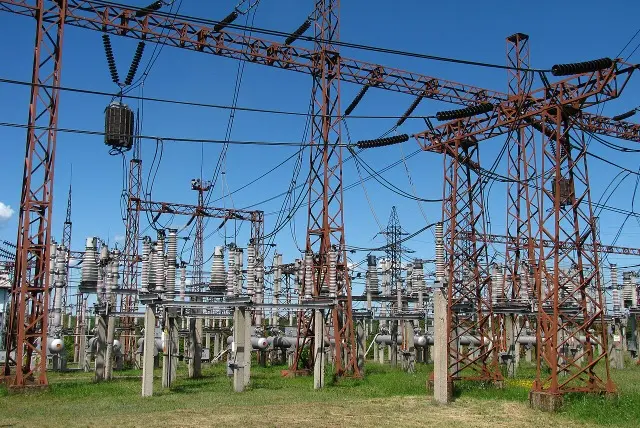
Switchgear is a combined set of switches, circuit breakers, fuses, relays and other equipment, normally housed in a metal enclosure, that controls, protects and isolates electrical circuits. It switches power on and off, clears faults such as short circuits automatically, and lets engineers isolate equipment safely for maintenance.
If you only need the short version, that is it. The rest of this guide explains how switchgear works, what is inside it, the different types, where it is used, the standards that apply and why the industry is moving away from SF6 gas.
Safety notice: Switchgear can carry dangerous voltages and very high fault currents. This guide is for general education only. Installation, operation, inspection and maintenance must be done by qualified, authorised electrical professionals following local laws and safety standards.
Table of contents
- What Is Switchgear?
- What Are the Main Functions of Switchgear?
- How Does Switchgear Work?
- Step-by-step: what happens during a fault
- What happens to the rest of the system?
- What Are the Main Components of Switchgear?
- What Are the Different Types of Switchgear?
- Types of switchgear by voltage
- Types of switchgear by insulation medium
- Types of switchgear by construction
- AIS vs GIS Switchgear: What Is the Difference?
- Switchgear vs Switchboard vs Panelboard vs MCC
- Where Is Switchgear Used?
- Important Switchgear Standards and Regulations
- Switchgear Safety and Arc Flash
- Switchgear Maintenance and Condition Monitoring
- SF6 Gas in Switchgear: Why Is the Industry Moving Away From It?
- EU phase-out timeline
- Smart Switchgear and the Future of Power Systems
- A Brief History of Switchgear
- Switchgear Market in 2026
- Common Misconceptions About Switchgear
- Frequently Asked Questions About Switchgear
- What is switchgear in simple words?
- What is the main purpose of switchgear?
- What are the three main types of switchgear?
- What is the difference between switchgear and a circuit breaker?
- What is the difference between AIS and GIS?
- What is arc-resistant switchgear?
- What gas is used in gas-insulated switchgear?
- Why is SF6 being phased out?
- How often should switchgear be maintained?
- How long does switchgear last?
- What is the difference between metal-clad and metal-enclosed switchgear?
- Can switchgear be used outdoors?
- What is smart switchgear?
- Conclusion: Why Is Switchgear Important?
- Sources
What Is Switchgear?
The word “switchgear” covers the switching devices in an electrical system and the equipment built around them to control, measure and protect the circuit. That includes disconnect switches, fuses and circuit breakers, plus busbars, relays, instrument transformers, wiring and the metal housing. It is used wherever electricity is generated, transmitted, distributed or converted.
Switchgear matters because electrical faults happen. A cable can be damaged, insulation can fail or a motor can overload. Without switchgear, one fault could damage expensive equipment, start a fire or black out a whole site. With it, the faulty section is cut off in a fraction of a second while the rest keeps running.
Switchgear is not a single device. A circuit breaker on its own is one part. Switchgear is the full assembly, as the comparison with a circuit breaker later in this guide shows.
What Are the Main Functions of Switchgear?
Switchgear has three core jobs. A fourth, monitoring, supports the other three.
| Function | What it does | Example |
|---|---|---|
| Switching and control | Connects and disconnects circuits, manually or automatically, and routes power. | Switching a feeder on to supply a workshop. |
| Protection | Detects short circuits, overloads and earth faults and interrupts them to limit damage. | A breaker trips when a cable fails. |
| Isolation | Separates a faulty or de-energised section so people can work safely. | Isolating and earthing a motor feeder before repairs. |
| Monitoring and measurement | Measures voltage and current and supports local or remote supervision. | A control room sees feeder load in real time. |
How Does Switchgear Work?
In normal conditions, power flows from an incoming supply through the busbars to outgoing feeders. Instrument transformers continuously send scaled-down readings to the protection relays, which simply watch and do nothing. Operators can open or close breakers when they need to switch equipment in or out.
Step-by-step: what happens during a fault
- A fault occurs. For example, a short circuit on an outgoing cable.
- Current transformers (CTs) and voltage transformers (VTs) detect it. They pass a safe, scaled-down version of the abnormal current or voltage to the relay.
- The protection relay analyses the signal. It compares the readings with its settings.
- The relay sends a trip command to the circuit breaker’s trip coil.
- The breaker contacts separate. An electrical arc forms between them and is extinguished by vacuum, gas or air.
- The faulty section is isolated. Healthy feeders stay energised.
What happens to the rest of the system?
Because each feeder has its own breaker and protection, only the circuit with the fault is disconnected. This is called discrimination or selectivity. Everything else, such as other production lines or other buildings, keeps its supply.
Illustrative example, not real data: in a factory, a short circuit occurs on one conveyor motor cable. The relay on that motor feeder trips its breaker. The motor stops, but the lighting, compressors and other production lines connected to the same busbar continue to run.
What Are the Main Components of Switchgear?
Most switchgear assemblies contain the parts below. Medium-voltage panels are drawn in Figure 2 because they show the layout most clearly.
| Component | What it does in plain language |
|---|---|
| Circuit breaker | Opens automatically to interrupt fault or overload current, and can be operated manually. See the guide to types of circuit breakers for the differences. |
| Disconnect switch (isolator) | Gives a visible or physical gap for isolation. Normally not used to break load current. |
| Fuse | A sacrificial device that melts and opens the circuit when current is too high. |
| Busbar | A copper or aluminium bar that carries and distributes power between incoming and outgoing circuits. |
| Current transformer (CT) | Reduces high current to a small, safe value for meters and relays. |
| Voltage transformer (VT/PT) | Reduces high voltage to a safe value for meters and relays. |
| Protection relay | Monitors the circuit and commands the breaker to trip when it detects a fault. |
| Earthing switch | Connects a de-energised conductor to earth so that stored charge is discharged and work can be done safely. |
| Enclosure | Metal housing that supports and protects the equipment and, in some designs, contains arc energy. |
| Control wiring and terminals | Carries control, interlock, alarm and communication signals. |
What Are the Different Types of Switchgear?
There is no single way to classify switchgear. The three most useful ways are by voltage, by insulation medium and by construction.
Types of switchgear by voltage
Low-voltage (LV) switchgear is used for building and factory distribution and motor circuits. Medium-voltage (MV) switchgear sits in industrial plants and distribution substations, and commonly uses vacuum circuit breakers. High-voltage (HV) switchgear is used in transmission substations and large power stations.
| Class | IEC usage | IEEE/ANSI usage | Typical applications |
|---|---|---|---|
| Low voltage | Up to 1 kV AC | Traditionally up to 600 V (the US NEC also treats up to 1,000 V as LV in some contexts) | Commercial buildings, factories, data centres, motor control |
| Medium voltage | Above 1 kV, commonly up to 52 kV in IEC switchgear contexts | 600 V to 69 kV (as described by Eaton) | Distribution substations, large factories, renewable plants |
| High voltage | Above the MV boundary, commonly above 52 kV | 69 kV to 230 kV | Transmission grids and bulk substations |
Reader tip: In India and the UK, IEC terminology is the usual reference. US documents often follow IEEE/ANSI, so the same word, such as “medium voltage”, can cover a different range.
Types of switchgear by insulation medium
| Type | How it works | Key point |
|---|---|---|
| Air-insulated (AIS) | Air separates live parts. | Common and generally lower cost, but needs more space. |
| Gas-insulated (GIS) | Live parts sit in a sealed, gas-filled metal enclosure. | Very compact. Traditionally uses SF6. |
| Vacuum | Arc is extinguished inside a vacuum interrupter. | Widely used in modern MV breakers. |
| Oil or fluid-insulated | Insulating fluid provides insulation and cooling. | Oil adds spill and fire considerations; older oil designs are largely replaced. |
| Solid-insulated | Solid dielectric material insulates the live parts. | Often positioned as an SF6-free option. |
Types of switchgear by construction
| Type | What it means |
|---|---|
| Metal-clad | Separate earthed metal compartments for breaker, busbars and cables, with insulated busbars and a withdrawable breaker (IEEE C37.20.2). |
| Metal-enclosed | Housed in metal but without full compartmentalisation, so devices can share space (IEEE C37.20.3). |
| Arc-resistant | Tested to contain or redirect internal arc energy away from personnel (IEEE C37.20.7 in North America). |
| Indoor / outdoor | Outdoor designs include weatherproof enclosures and pad-mounted units. |
| Fixed / withdrawable | Withdrawable (draw-out) breakers can be racked out for maintenance. Fixed units cannot. |
AIS vs GIS Switchgear: What Is the Difference?
The practical difference is space against cost. GIS fits into a much smaller footprint, which is why it is popular in cities and basements. AIS costs less and is easier to reach for inspection, but needs room for air clearances. Hybrid designs sit in between.
| Feature | AIS | GIS | Hybrid |
|---|---|---|---|
| Insulation | Air | Gas (traditionally SF6; SF6-free options exist) | Mix of gas-insulated modules and air-insulated parts |
| Footprint | Larger | Much smaller | In between |
| Initial cost | Generally lower | Generally higher | In between |
| Maintenance | Parts are accessible but exposed to dust and moisture | Sealed, so less exposure; gas condition must be monitored | Site-specific |
| Environmental note | No SF6 issue | SF6 versions use a high-GWP gas | Depends on the gas used |
| Typical use | Outdoor substations with space | Urban and space-limited sites | Upgrades and constrained sites |
Switchgear vs Switchboard vs Panelboard vs MCC
These terms are often mixed up. They overlap in everyday speech but do different jobs. In short, switchgear focuses on protection and fault interruption, while a switchboard mainly distributes power onward. Schneider Electric notes that switchboards rarely go above 600 V, whereas switchgear can serve much higher voltages.
| Equipment | Main function | Typical voltage |
|---|---|---|
| Switchgear | Controls, protects and isolates circuits, and clears faults | LV to HV |
| Switchboard | Distributes power to downstream circuits | Usually LV |
| Panelboard | Distributes power to small branch circuits such as lighting and sockets | LV |
| Motor control centre (MCC) | Houses starters, drives and controls for several motors | Usually LV |
| Circuit breaker | Interrupts current; a component inside switchgear | Rated per device |
| Transformer | Changes voltage level; does not switch or protect. Often sits next to switchgear. | Any |
Where Is Switchgear Used?
Switchgear appears anywhere electricity must be controlled safely, from power stations to a hospital basement. This table shows why each setting needs it.
| Application | Why switchgear is needed | Commonly used |
|---|---|---|
| Power generation | Connects generators to the grid and protects them from faults | MV and HV |
| Transmission and distribution substations | Routes power between networks and isolates faulted lines. Part of the wider power distribution system | MV and HV, AIS or GIS |
| Industrial plants | Protects large motors, transformers and process feeders | MV and LV |
| Commercial buildings | Distributes and protects building supplies | LV |
| Hospitals | Keeps critical supplies reliable and allows safe isolation | LV and MV |
| Data centres | Provides reliable, protected supply to critical loads | LV and MV |
| Solar and wind farms | Collects and connects renewable output to the grid | MV and HV |
| Railways and transport | Feeds and protects traction and station supplies | MV and LV |
| Water and wastewater plants | Controls pumps and treatment equipment | LV and MV |
| Marine and infrastructure | Manages onboard or site power in harsh environments | LV and MV |
Important Switchgear Standards and Regulations
Standards set how switchgear is designed, tested and rated. Which ones apply depends on the voltage, the country and the type of assembly, so always check the current edition before specifying or buying.
| Standard | What it covers | Region |
|---|---|---|
| IEC 62271 series | High-voltage switchgear and controlgear, including GIS and metal-enclosed designs | International |
| IEC 61439 series | Low-voltage switchgear and controlgear assemblies | International |
| IEEE C37 series | North American switchgear and breaker requirements, including metal-clad, metal-enclosed and arc-resistant designs | US and North America |
| UL 1558 and UL 891 | North American product safety standards for LV metal-enclosed switchgear (UL 1558) and switchboards (UL 891) | US and North America |
| NFPA 70E | Electrical safety in the workplace, including arc-flash risk | US |
| IEEE 1584 | Guide for arc-flash hazard calculations | International use |
| EU Regulation 2024/573 | Fluorinated greenhouse gases, including SF6 restrictions on new switchgear | EU |
In India, equipment is generally expected to follow Bureau of Indian Standards (BIS) documents, many of which are based on IEC standards, and electrical safety rules set by the Central Electricity Authority and state authorities. Rules differ by installation type, so confirm the current requirements with your utility or a qualified engineer. For standards text, go to the IEC and IEEE Standards Association.
Switchgear Safety and Arc Flash
The biggest hazard is arc flash: a sudden release of heat, light and pressure when current jumps through the air between conductors. It can cause severe burns, blast injuries and equipment damage in a fraction of a second.
Common risks include electric shock, short circuits, arc flash, electrical fires and equipment failure. Good practice includes:
- Carrying out an arc-flash risk assessment (IEEE 1584 provides the calculation method; NFPA 70E covers workplace safety practice).
- Using the correct personal protective equipment (PPE) for the assessed hazard.
- Isolating, proving dead and applying lock-out and tag-out before work.
- Following authorised operating procedures and using remote operation where possible.
- Choosing tested arc-resistant designs where the risk justifies it.
Important: Never attempt live work on switchgear without training and authorisation. In the UK, electrical safety at work is covered by the Health and Safety Executive; in the US, by OSHA and NFPA 70E.
Switchgear Maintenance and Condition Monitoring
Switchgear may sit idle for months and then be expected to operate in milliseconds. Maintenance makes sure it will. Typical activities include visual inspection, checking connections, breaker inspection and testing, thermal imaging, partial-discharge testing, insulation checks and relay testing.
Condition-based (predictive) maintenance uses sensors for temperature, partial discharge and breaker operation to spot problems early, instead of relying on fixed calendars alone. Warning signs include unusual heating, abnormal noises, visible damage, insulation deterioration, repeated protective trips and, in gas-insulated equipment, gas leakage.
There is no universal inspection interval. Follow the manufacturer’s manual, local regulations and your asset-management plan, and use qualified personnel.
SF6 Gas in Switchgear: Why Is the Industry Moving Away From It?
Sulphur hexafluoride (SF6) is an excellent insulator and arc-quenching gas, which is why it became standard in compact gas-insulated switchgear. The problem is its climate impact. Its global warming potential is roughly 23,500 times that of CO₂ over 100 years (published values go up to about 25,000), so even small leaks matter.
SF6-free switchgear replaces it with alternatives. Common options include clean (dry) air, natural-origin gas mixtures, CO₂-based mixtures, fluoroketone and fluoronitrile blends where permitted, and solid-dielectric designs, often combined with vacuum interrupters.
EU phase-out timeline
Under EU Regulation 2024/573, restrictions on new switchgear using these gases start in stages. They apply to new equipment in the EU, not to the existing installed base.
| Voltage category | EU restriction start |
|---|---|
| Up to 24 kV | 1 January 2026 |
| Above 52 kV up to 145 kV | 1 January 2028 |
| Above 24 kV up to 52 kV | 1 January 2030 |
| Above 145 kV | 1 January 2032 |
Not a global ban: These are EU rules. Other countries and some US states have their own timetables. Already-installed SF6 switchgear does not have to be removed.
Which technology suits a project depends on footprint, cost, maintenance, voltage and local regulation, so there is no single best choice. A qualified engineer should make the selection.
Smart Switchgear and the Future of Power Systems
Smart (digital) switchgear adds sensors, digital protection relays, also called intelligent electronic devices (IEDs), and communications to conventional equipment. The result is remote monitoring and control, early fault detection and better data for planning. It also helps connect solar, wind, batteries and microgrids, where power flows in more than one direction. The core jobs of control, protection and isolation do not change.
A Brief History of Switchgear
- Early systems: open knife switches mounted on insulating panels.
- Oil-filled switchgear: introduced as voltages and power levels rose, to quench arcs.
- Metal-enclosed designs: electrically operated equipment in protective housings.
- Air-blast, vacuum and SF6 technologies: became the modern interrupting methods.
- Today: digital monitoring and SF6-free designs.
Switchgear Market in 2026
Switchgear demand is rising with grid upgrades, renewable energy, data centres and electrification. Market-research firms disagree on the exact size, because they define scope differently, so treat these as third-party estimates, not established facts.
Figure 6: Share estimates from Persistence Market Research (medium voltage) and Mordor Intelligence (data centres). The two charts use different scopes and should not be combined.
| Figure | What it measures | Source type |
|---|---|---|
| 13.11% CAGR (2027 to 2032) | Data-centre switchgear market growth | Mordor Intelligence estimate |
| About 2x since 2020 | Growth in F-gas-free switchgear volumes placed on the EU market | Siemens Energy summary of a European Commission-commissioned survey |
Common Misconceptions About Switchgear
- “Switchgear generates electricity.” No. It only controls, routes and protects power.
- “A circuit breaker is switchgear.” A breaker is a key component, not the whole assembly.
- “A home electrical panel is switchgear.” A home consumer unit is low-voltage distribution equipment. Industrial and utility switchgear is built for far higher fault levels and more complex protection.
- “All switchgear is gas-insulated.” Air, vacuum, solid and fluid designs also exist.
- “SF6 is banned everywhere.” The restrictions described above are EU rules for new equipment.
- “Switchgear works without protective relays.” Fuses and some self-powered devices can trip without a separate relay, but most modern switchgear relies on relays or digital protection to detect faults.
Frequently Asked Questions About Switchgear
What is switchgear in simple words?
Switchgear is a group of switches, circuit breakers, fuses and protective devices in one enclosure. It turns power on and off, cuts off faulty circuits automatically and lets people isolate equipment for safe maintenance. Think of it as the control and safety hub of an electrical network.
What is the main purpose of switchgear?
The main purpose is to control, protect and isolate electrical circuits. It routes power where it is needed, detects faults such as short circuits and disconnects only the affected section, and provides a safe point of isolation so equipment can be worked on after it has been de-energised.
What are the three main types of switchgear?
The three types most people mean are low-voltage, medium-voltage and high-voltage switchgear. Switchgear can also be grouped by insulation medium (air, gas, vacuum, solid) and by construction (metal-clad, metal-enclosed, arc-resistant, fixed or withdrawable). The voltage limits depend on the standard being used.
What is the difference between switchgear and a circuit breaker?
A circuit breaker is one device that opens and closes a circuit, including under fault conditions. Switchgear is the complete assembly that houses breakers together with busbars, disconnectors, instrument transformers, relays, earthing switches and the enclosure. A breaker is a part; switchgear is the whole system.
What is the difference between AIS and GIS?
Air-insulated switchgear (AIS) uses air between live parts, so it needs more space but is usually cheaper and easier to inspect. Gas-insulated switchgear (GIS) seals live parts in a gas-filled metal enclosure, making it far more compact but typically more expensive. Traditional GIS uses SF6 gas.
What is arc-resistant switchgear?
Arc-resistant switchgear is built and tested to withstand an internal arcing fault. Its construction contains the pressure and heat and directs hot gases away from people standing in front of the equipment. It reduces risk to operators but does not replace safe working procedures or correct protective equipment.
What gas is used in gas-insulated switchgear?
Traditionally gas-insulated switchgear uses sulphur hexafluoride (SF6). Newer SF6-free designs use clean or dry air, natural-origin gas mixtures, CO2-based mixtures, or fluoroketone and fluoronitrile blends where regulations allow, often paired with vacuum interrupters to break the current.
Why is SF6 being phased out?
SF6 is a very powerful greenhouse gas, with a global warming potential roughly 23,500 times that of carbon dioxide over 100 years. Even small leaks matter, so the EU is restricting new SF6-containing switchgear in stages from 2026. Existing equipment is not banned outright.
How often should switchgear be maintained?
There is no universal interval. The right schedule depends on the manufacturer’s instructions, operating conditions, the equipment’s age and condition, and local rules. Many owners combine routine inspection with condition monitoring. Ask a qualified engineer or follow the manufacturer’s manual rather than using a generic figure.
How long does switchgear last?
There is no single, verified service life that applies to all switchgear. Life depends on the environment, how often it operates, fault history, maintenance quality and whether parts such as breakers are replaced or upgraded. Manufacturers and asset managers usually assess life case by case.
What is the difference between metal-clad and metal-enclosed switchgear?
Metal-clad switchgear has separate, earthed metal compartments for the breaker, busbars and cables, with insulated busbars and usually a withdrawable breaker. Metal-enclosed switchgear is also housed in metal but does not need that full compartmentalisation, so devices may share space.
Can switchgear be used outdoors?
Yes. Outdoor switchgear is built with weatherproof enclosures, or is installed as open air-insulated equipment in a substation yard. Pad-mounted switchgear is a common outdoor type for local distribution. Indoor switchgear is not designed for rain, dust or extreme temperatures.
What is smart switchgear?
Smart switchgear adds sensors, digital relays and communications to conventional switchgear. It can report temperature, load and breaker condition in real time, support remote operation and help engineers spot developing faults early. It still performs the same core jobs of control, protection and isolation.
Conclusion: Why Is Switchgear Important?
Switchgear is the equipment that lets an electrical system be switched, protected and isolated safely. It senses faults, disconnects only the affected section and gives people a safe way to work on de-energised equipment. Choosing the right type, keeping it maintained and following the correct standards are what keep power supplies safe and reliable. Digital monitoring and SF6-free designs are the main changes shaping the industry now.
For related reading, see how circuit breakers work.
Sources
- Schneider Electric: What is switchgear?
- Eaton: Fundamentals of medium voltage switchgear
- IEEE Technology Navigator: Switchgear
- Wikipedia: Switchgear
- EUR-Lex: Regulation (EU) 2024/573
- Siemens Energy: From F-gas regulations to SF6-free switchgear
- Eaton: Guide to SF6-free
- Grand View Research: Switchgear market
- Mordor Intelligence: Data centre switchgear market

2 thoughts on “What Is Switchgear? Types, Functions, Components and Uses”